Data as of 20 September 2026. The CORE One on sale today is the second-generation CORE One+, the machine compared here.
Buy the MK4S if you print PLA, PETG and TPU and like an open machine you can reach into from every side. Buy the CORE One+ if ABS, ASA, nylon or PC is anywhere on your list, because the enclosure and the 55 °C chamber are the whole difference and everything else is close to a tie.
The figures come from Prusa’s MK4S product page and Prusa’s CORE One+ product page. This is a comparison on paper. We have not printed on either machine.
Where they differ
| MK4S | CORE One+ | |
|---|---|---|
| Kinematics, per Prusa | Cartesian, moving bed | CoreXY |
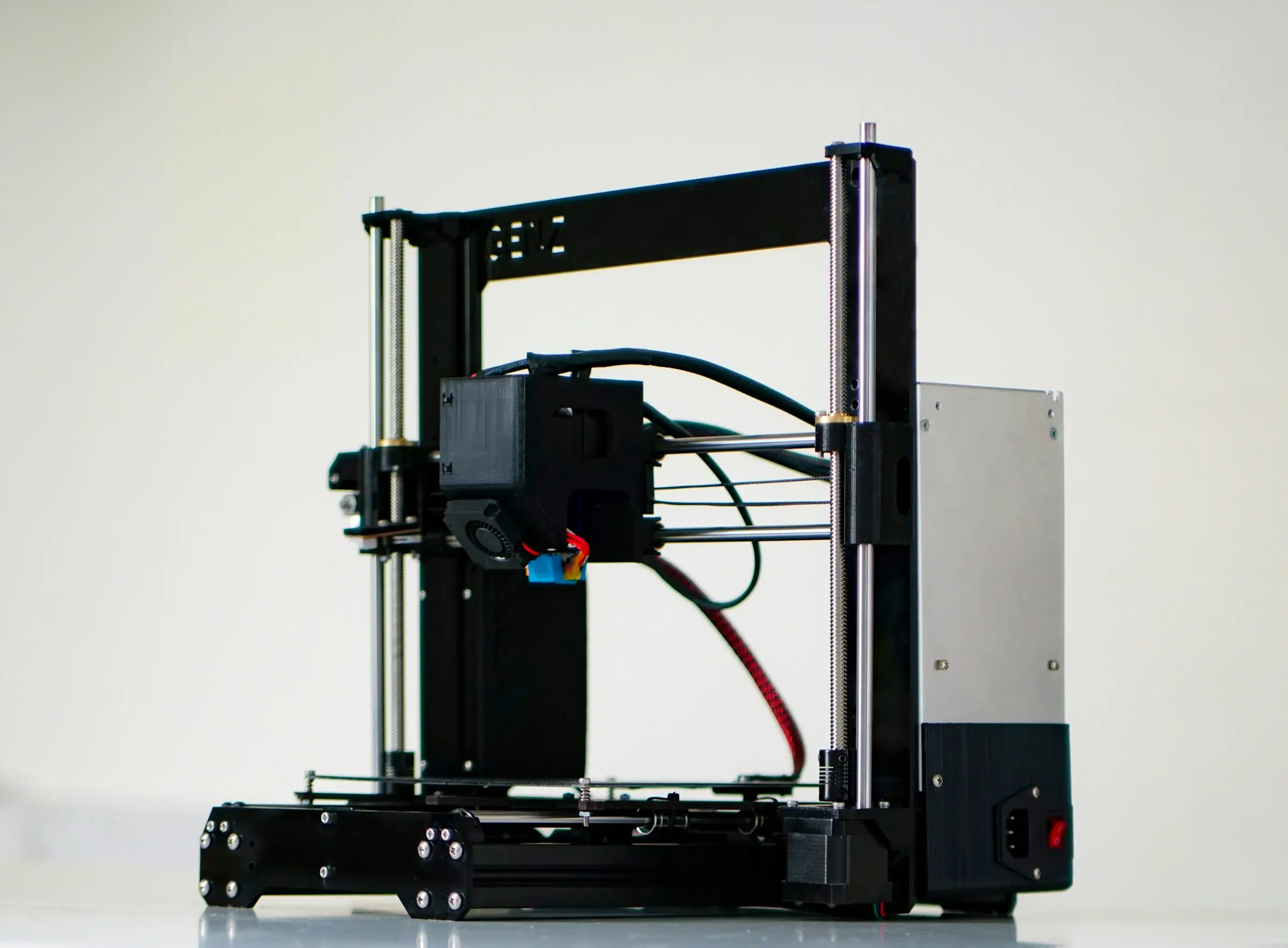
| Frame | Aluminum extrusions and frame | All-steel exoskeleton |
| Enclosed | No, enclosure sold as an add-on | Yes |
| Chamber temperature control | No | Yes, to 55 °C |
| Max chamber temperature | 45 °C inside the add-on enclosure | 55 °C |
| Build volume | 250 x 210 x 220 mm | 250 x 220 x 270 mm |
| Build volume in liters | 11.6 | 14.9 |
| Outside dimensions | 500 x 550 x 400 mm | 415 x 444 x 555 mm |
| Weight | 7 kg without spool | 22.5 kg |
| Multi-material | MMU3, 5 filaments | MMU3, 5 filaments, and INDX, up to 8 |
| Assembled price, per Prusa’s comparison table | from $999 | from $1,299 |
The MK4S kit is cheaper still: the US list price checked 2026-09-20 was $679, although Prusa’s comparison table on the same day showed $729 for the kit, so treat the kit as roughly $700 and confirm at checkout. The assembled CORE One+ was $1,299 on both. Prusa’s buy box changes with your shipping country, so check the figure for your region.
Where they are identical
Both top out at a 290 °C nozzle and a 120 °C bed. Both use the Nextruder, a direct drive with a 10:1 planetary gearbox, and 0.9° X and Y steppers. Both have input shaping, a load cell sensor in the print head, power panic and a 240 W supply. Both ship with the same high-flow 0.4 mm brass nozzle and a PEI spring steel sheet, and both can be bought assembled or as a kit.
The part that melts the plastic is the same on each. What changes is the box around it and the way the head moves.
The enclosure decides the material list
Hold each printer’s maximums against the ranges in our filament temperature table, and the two machines split cleanly.
| Material | MK4S | CORE One+ |
|---|---|---|
| PLA, PETG, TPU | Yes | Yes |
| ABS | With care: temperatures pass, no enclosure | Yes |
| ASA | No: needs an enclosure | Yes |
| Nylon, PA6 blends | No: needs an enclosure | Yes, at exactly the 290 °C top of the range |
| Carbon-fiber nylon | With care | With care: 290 °C against brands that ask for 300 °C |
| PC | No: needs an enclosure | Yes on nozzle, bed and enclosure |
Temperature never separates them. A 120 °C bed clears even the 105 to 115 °C that the hottest ASA data sheet in our table asks for, on both. The MK4S fails ASA, nylon and PC on one line only: the filament makers say enclosure required, and it has none.
Prusa’s own list says nearly the same thing. The MK4S page gives PLA, PETG, Flex, PVA, PC, PP, CPE and PVB as supported, and adds ABS, ASA, HIPS and PA “when using the Original Prusa Enclosure”. The one disagreement is PC, which Prusa lists for the open MK4S and the PC data sheets we hold do not. I would side with the data sheets: Prusa’s own CORE One+ page says PC needs a heated chamber.
You can close the gap by buying the enclosure, but look at the chamber row first. Prusa rates the add-on enclosure at 45 °C and the CORE One+ at 55 °C with active control. Bambu’s ABS sheet asks for a 45 to 60 °C chamber, so an enclosed MK4S sits at the bottom of that window and the CORE One+ near the top. The check of 25 printers against ABS, ASA, nylon and PC shows the wider field.
At the cool end of the range, Prusa says the chamber vents automatically, so PLA prints with the door shut.
Volume and desk space
The CORE One+ gains 10 mm in Y and 50 mm in Z, which takes it from 11.6 to 14.9 liters, 29 percent more. X is the same 250 mm on both, so the gain is mostly height.
It does this on less desk. The MK4S occupies 500 x 550 mm, which is 2,750 cm², partly because a moving bed needs room to swing. The CORE One+ stands on 415 x 444 mm, or 1,843 cm². That is a third less surface for the bigger build volume. The price is height, 555 mm against 400 mm, and mass: at 22.5 kg it is more than three times the weight of the MK4S.
Per liter of build space, the assembled prices work out at about $86 for the MK4S and $87 for the CORE One+. The extra $300 buys volume at the same rate, and the enclosure, chamber control and steel frame come along at no premium.
Speed
Prusa publishes no maximum speed or acceleration for either machine, so there is no honest number for the table. The CORE One+ page features a user quote calling it “20% faster than the MK4S”, crediting the CoreXY motion. The mechanical argument holds: CoreXY moves a light head while the bed only travels in Z, where the MK4S throws the part back and forth on every Y move.
Both share the same high-flow nozzle, and flow is what caps real print time, as the volumetric flow calculator shows.
What comes next
Only the CORE One+ is listed for INDX, Prusa’s eight-tool changer, and for the 400 °C HT hotend. Both are marked “coming soon” on the page, so count them as a direction, not a feature you are buying today.
Who each one suits
The MK4S suits someone who prints PLA and PETG, wants to build a kit for roughly $700, and values an open frame that is easy to reach into and light enough to carry. If you are unsure which of those two filaments you need, the PLA vs PETG guide sorts it out.
The CORE One+ suits anyone printing parts for outdoors, under a hood or under load. If ASA is the plan, read what ASA needs against PETG and ABS and then stop considering the open machine. It also suits small desks.
My view: at assembled prices the MK4S is hard to argue for. You pay the same per liter and give up the enclosure. The MK4S makes sense as a kit, for the price and for what you learn building it. Put the two side by side in the comparison tool.