Charge the full cost of the print, divided by your success rate, plus a markup. Full cost means four things: filament, electricity, wear on the machine and your own time. For most small parts your time is the biggest line by a wide margin, which is why pricing on filament weight alone loses money.
The formula, which is the one behind our print cost calculator:
price = (material + energy + wear + time) / (1 - failure rate) x (1 + markup)
One part, line by line
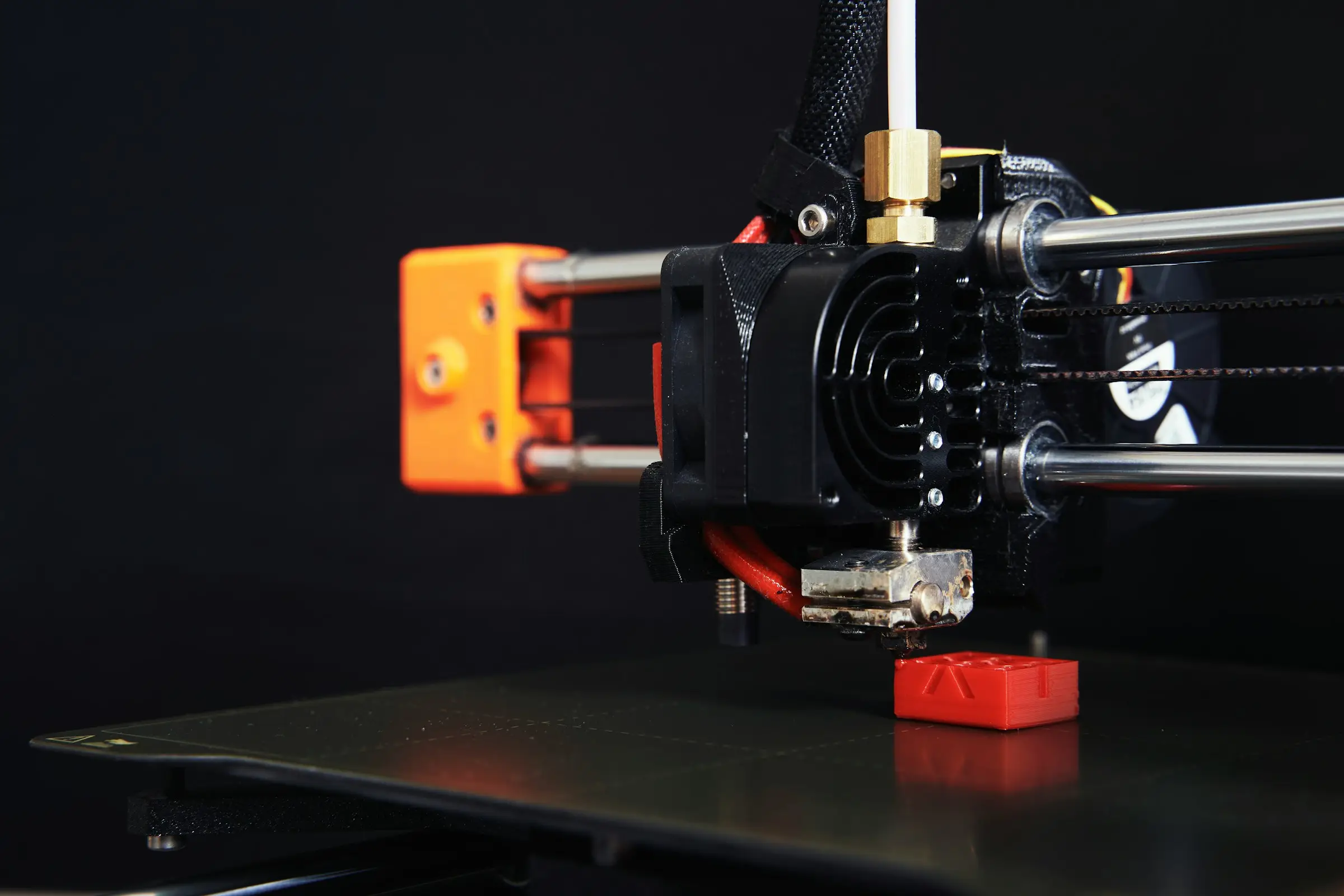
Take a bracket that weighs 120 g and prints in 6 hours on a Bambu Lab P1S. The inputs below are either sourced or labelled as assumptions. Swap in your own.
| Line | Working | Cost |
|---|---|---|
| Material | 120 g x ($20 / 1,000 g) | $2.40 |
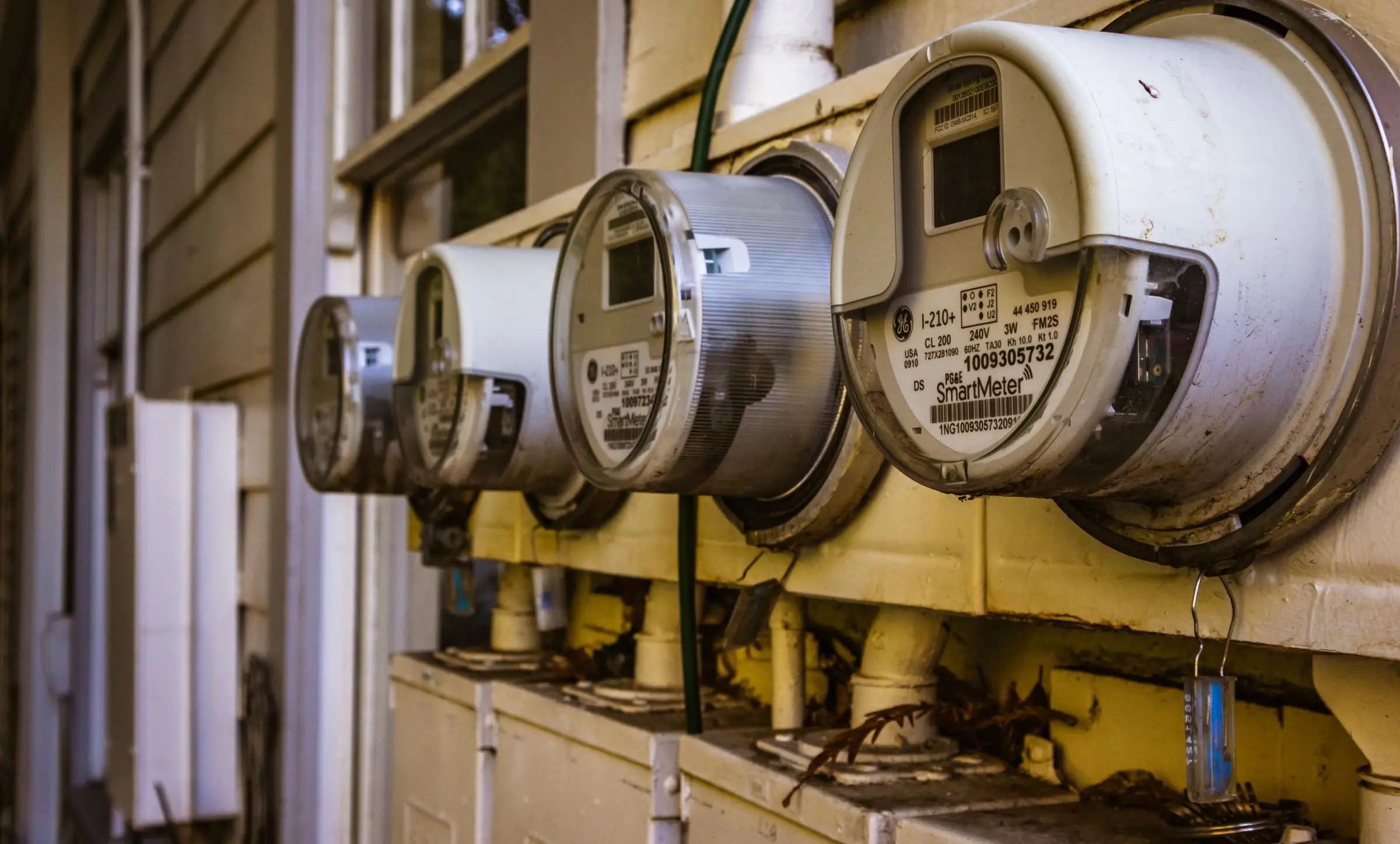
| Energy | 0.105 kW x 6 h x $0.1834 per kWh | $0.12 |
| Wear | ($359 / 3,000 h) x 6 h | $0.72 |
| Time | 15 min at $20 per hour | $5.00 |
| Cost of one attempt | $8.23 | |
| Divided by (1 - 0.10) | $9.15 | |
| Times (1 + 0.50) | $13.72 |
Where the inputs come from. The $20 spool is an assumption, so use your real invoice price including shipping. The 105 W figure is Bambu Lab’s own published average for the P1S printing PLA. The electricity price is the EIA’s US residential average for June 2026, 18.34 cents per kWh. The $359 is the P1S price on Bambu’s US store on 2026-09-20 (a sale price, with $399 shown as the regular price). The 3,000 hour life, the $20 hourly rate, the 10 percent failure rate and the 50 percent markup are assumptions. None of them is a fact about your shop. They are the four numbers you have to decide for yourself.
Look at the proportions. Electricity is 12 cents. It is 1.4 percent of the cost of an attempt, and people argue about it far more than it deserves. Filament is 29 percent. Your 15 minutes of slicing, plate cleaning, support removal and packing is 61 percent.
Why a filament multiple fails
A shortcut you will meet is to price at some multiple of the filament cost, say three times. On this bracket that gives $7.20. The print costs $9.15 to deliver once failures are included, so every sale loses $1.95 before you have made anything.
It gets worse as parts get smaller, because handling time does not shrink with the part. Run a 20 g clip that prints in one hour through the same formula with the same 15 minutes of handling:
- Material $0.40, energy $0.02, wear $0.12, time $5.00. One attempt costs $5.54.
- Divided by 0.9 that is $6.15. With the 50 percent markup, $9.23.
- Three times filament would have been $1.20.
The multiple is off by a factor of almost eight. No multiplier fixes this, because the thing being multiplied (grams) is not the thing driving the cost (minutes of your attention).
The multiple only starts to work on big, slow, hands-off prints. If the bracket needed no labor at all, its cost per attempt would fall to $3.23 and three times filament ($7.20) would cover it comfortably. So the shortcut is not wrong everywhere. It is wrong exactly where most small sellers operate: small parts, one at a time.
The failure rate divides, it does not add
If one print in ten fails, you need ten attempts to ship nine parts. Those nine sales have to pay for all ten attempts, so each sale carries 1 / 0.9 = 1.11 attempts. That is why the formula divides by (1 - failure rate) instead of adding 10 percent. At low rates the two are close. At a 30 percent failure rate, dividing gives 1.43 times cost while adding gives 1.30 times, and the gap is your money.
Count a failure honestly. A print that finishes but gets rejected for a blemish on the visible face is a failure. So is one the customer sends back.
What the markup has to cover
The subtotal of $9.15 is break-even on the print itself. It does not include marketplace fees, payment fees, packaging, postage, design time, customer messages or tax. The markup has to absorb all of those and then leave a profit. Fee levels vary by platform and change often, so check the current schedule where you sell and work backward: if fees and packaging take a quarter of the sale price, a 50 percent markup leaves you roughly 12 percent on cost, not 50. On the bracket: $13.72 less a quarter is $10.29, against a cost of $9.15.
Batching is where the money is
The cheapest way to cut the biggest line is to spread it. Put ten of those 20 g clips on one plate. Assume the batch takes 10 hours and the same 15 minutes of handling in total:
- Material $4.00, energy $0.19, wear $1.20, time $5.00. One attempt costs $10.39.
- Divided by 0.9 that is $11.54 for ten clips, or $1.15 each. With markup, $1.73 each.
Same part, same printer, same assumptions. The single clip had to sell at $9.23 and the batched clip at $1.73. If you only take one lesson from the formula, take that one: set a minimum order value or a setup fee for one-off jobs, and keep your per-part prices for batches.
Picking your four assumptions
For machine life, divide what you paid by the hours you expect before replacing the printer or spending the same again on parts. If you have no idea, pick a number you would be embarrassed to fall short of. A shorter life raises the wear line, but even at 1,000 hours the bracket’s wear is only $2.15.
For your hourly rate, use what you would have to pay someone else to do the handling. For failure rate, use your own log over the last 50 prints, not a guess. For energy, measure instead of reading the spec sheet: rated power on a spec page is the power supply maximum, and our electricity cost calculator explains how to get a real figure from a plug-in meter.
Then put your numbers into the print cost calculator and save the link. When filament or power prices move, you change one field and the price updates.